Tuesday, 5 October 2010
Print Analysis Sheet
Spot Colours In Photoshop CS5
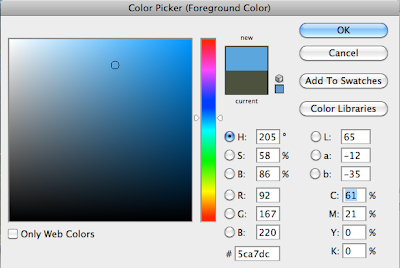
Drop down menu in Swatches - Select Pantone Solid Uncoated and all the colours are added to your swatches


Terminology
Terminology
CMYK (cyan/magenta/yellow/key black – 4 col process)
This is used in the most common printed process called litho or offset litho
RGB (red/green/blue – screen based)
Greyscale (Black and white continuous tone, any shade of grey such as a black and white photograph)
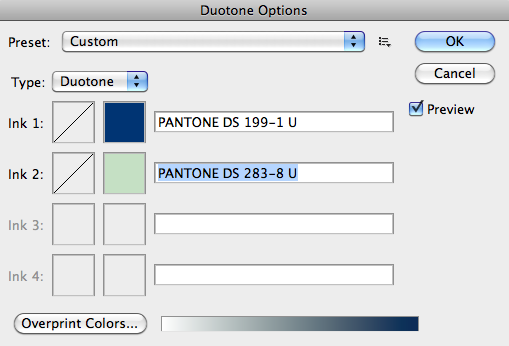
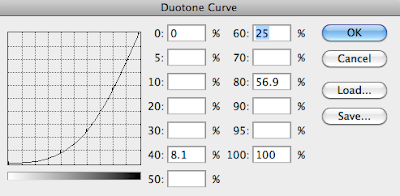
Duotone (when a continuous tone image is printed in 2 or more spot colours – this term is also generally used when describing tri and quadtones.
Spot colour (one or more specially mixed colours as opposed as a result of a CMYK or RGB mix)
Mono (like greyscale but with a coloured ink, ie:one colour only plus the colour of the material it’s printed on)
Raygun
Photoshop CS5


Bach Rescue Pastilles
Print Production Research
“Wine in a can” makes it simple to bring a glass of wine on the go. Avoid the hassle of wineglasses, opener and fragile bottle. This is a small convenient packaging totally made from aluminum, from which you drink like a glass. The cans are recycled in the same way as conventional aluminum cans.
The contour line give associations to the wine bottle and create good opportunities. Through a restrained color scheme with matte black as the base color and the color of the wine as accents, a feeling of exclusivity which gives the wine justice, is created.
I really like the design of the can however the matt finish does look like a bottle of aftershave.
Process: Flexography
Colours: White,Red and green
Stock: Aluminum
Format: Unique can design different in the market so only made for this certain company
Finishing: None, matt
Specials: None
Target: Classy modern wine drinkers but as it's in a can more accessible than a bottle maybe someone on the move in town?
Cost Band: Exclusive, as the can are only made for this company so it's not a standard can. But they cut back with the colours.
Quantity: Millions
Competition: Other Wines, but the concept of wine in a can stands out in the market but not sure how many and where would use this
Print Production Research

Designed by Amore, Sweden
Sunday, 3 October 2010
Colour Gamet
Apple CMY display design could be boon for print production
Friday, 1 October 2010
Printing Processes 28th September


Design and screen print a T-shirt
Multiple shows you how to create a piece of digital artwork in Illustratorand transfer it to a T-shirt using screen-printing techniques
Pad printing was originally developed and used in the Swiss watch industry to print watch dials and car instrument dials using manually operated machines with pads made from gelatine, and using slow drying oil based ink. In the late 1960s the process was further developed in Germany with the introduction of silicone rubber pads and mechanical machines; with the help of Wiederhold (now Coates Screen, part of Sun Chemicals) a range of pad printing inks were developed to allow the process to print onto a wide range of products and materials.
Pad printing is an indirect photogravure process. An image is etched into a flat printing plate and ink is flooded and doctored across the surface leaving ink only in the etch. A silicone rubber pad then presses down onto the etched plate and picks up the ink, which due to solvent evaporation has become tacky. The image is now on the surface of the silicone pad. Silicone rubber does not allow ink to penetrate its surface and therefore when the pad presses down onto the product to be printed it releases the ink as a clean film. The range of inks and solvents used enable the inks to adhere to the surface after releasing the ink the pad is then clean and free to repeat the process. Because such a wide range of inks are available almost any material can be printed and due to the flexibility of the silicone rubber pads uneven, curved and awkward shaped surfaces can be printed. As the ink is quick drying, pad printing is capable of 'wet on wet' printing and high quality multicolour designs can easily be achieved including four colour process. The more recent development of closed cup machines has made the process 'cleaner' and enabled the process to become more user friendly and automated. Ideal for printing from the computer onto 3D products.

Above- A few golf balls which have been produced using PAD printing process.